
By: Kyster Nanan
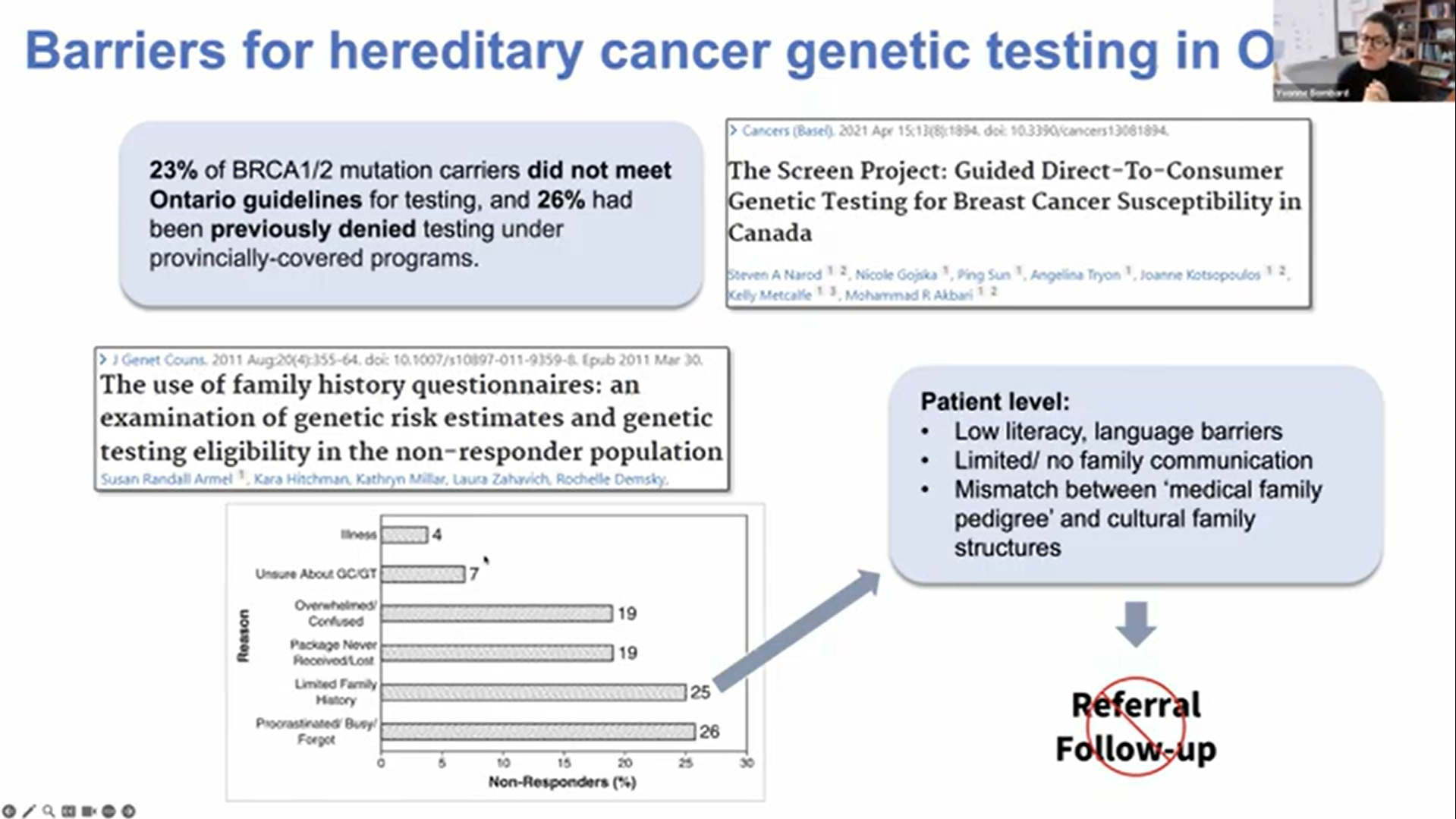
In March 2025, OMPRN welcomed Dr. Yvonne Bombard for a timely webinar titled “Mitigating Disparities in Hereditary Cancer Genetics: Rethinking Our Approaches.” Building on her enlightening equity, diversity and inclusion (EDI) seminar from 2023, Dr. Bombard explored how structural, cultural and geographic factors continue to shape access to cancer genetics services.
Dr. Bombard began by highlighting data that showed how a patient’s postal code often has a larger impact on cancer outcomes than their actual genomic profile, underscoring the enduring effects of racism and racialization in contemporary health care. She described patterns of “referral bias” where patients of different racial or ethnic backgrounds are unequally likely to be offered genetic testing. She noted that language barriers, low health literacy and cultural taboos around discussing cancer among the family all contribute to under-diagnosis of hereditary risk. A key theme was the relative paucity of province-wide data on social determinants of health since only a handful of clinics systematically track race, income and other factors, and follow up is quite limited. Dr. Bombard reasoned that closing these data gaps is essential for targeted interventions.
Turning to solutions, she described several innovative outreach models. Mobile testing trucks, complete with on-board genetic counsellors, sample-collection stations and interactive patient-education kiosks, are rolling into rural and remote communities to bring genomic services directly to people who might otherwise go without. Pop-up clinics, hosted in community centres and faith-based venues, use local ambassadors and live demonstrations to spark dialogue, demystify testing and foster trust. In some regions, buses roam around to offer counselling and specimen collection on wheels. Meanwhile, digital platforms that are customized for language, literacy level and cultural context are being developed to support patient education, risk assessment and long-term follow-up.
As a closing point, Dr. Bombard emphasized the importance of cultural sensitivity training for health professionals and of engaging patient partners in co-designing both in-person and digital services. The seminar offered a compelling call to action to pair modern genomics technologies with equity-driven delivery models, ensuring that advances in hereditary cancer genetics reach every community across Ontario. The lively interactive discussion that followed her presentation highlighted an interest in convening a follow-up session to dive deeper into implementation challenges and measuring impact.
OMPRN is grateful to Dr. Bombard for once again sharing her expertise and inspiring us with practical, forward-thinking strategies! You are invited to watch or revisit the webinar recording of on the OMPRN YouTube channel: Mitigating Disparities in Hereditary Cancer Genetics.
Posted on: