
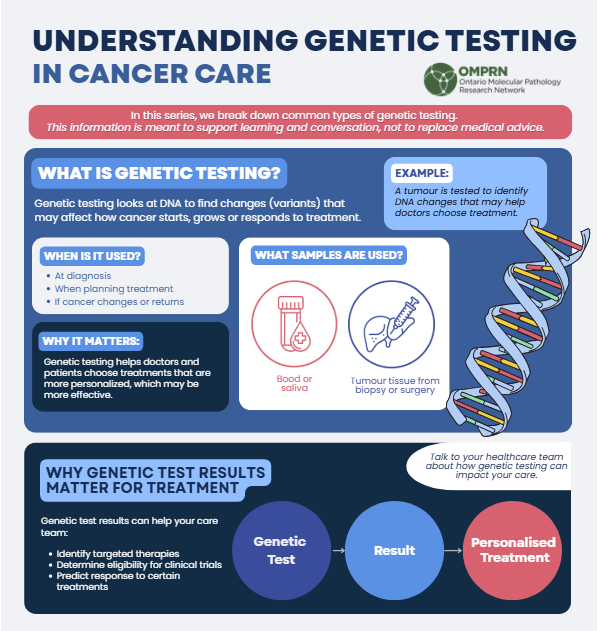
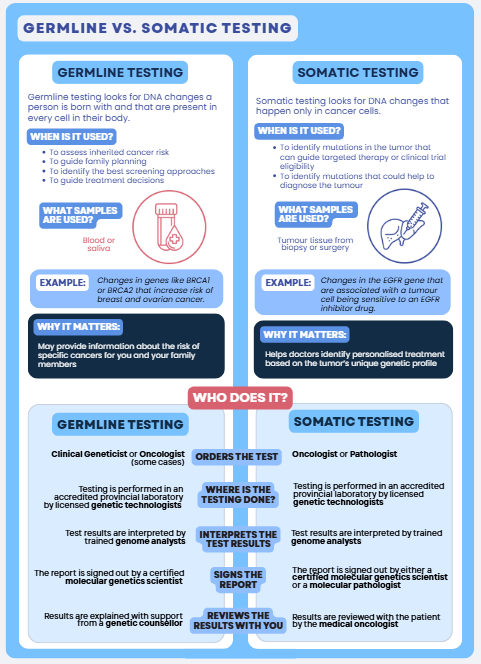
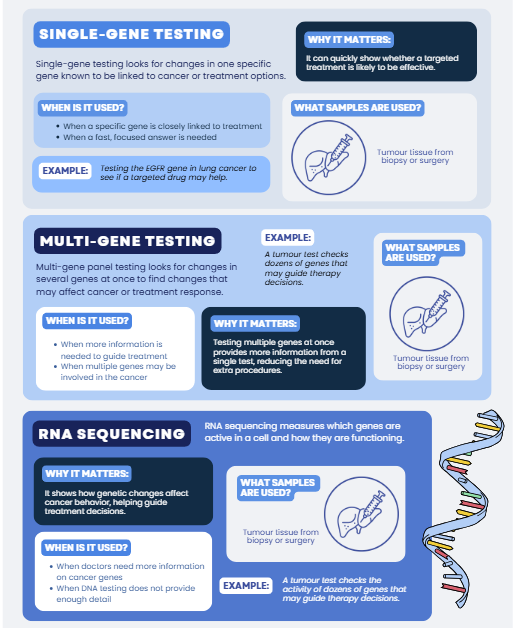
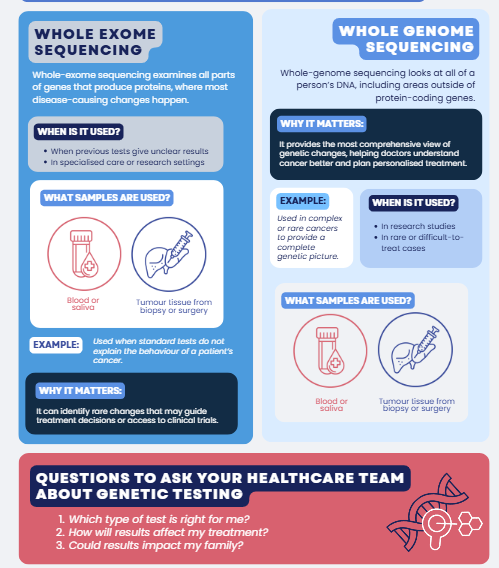
Genetic testing plays an important role in cancer care by helping healthcare teams to find biomarkers present in a person’s cancer and identify treatment options that will be most effective. This lesson explains the basics of genetic testing in cancer care, including the differences between germline and somatic testing as well as all the different types of genetic tests that exist. It also goes through why genetic testing may be recommended, who does the tests and how results can influence treatment decisions. By understanding these concepts, patients and families can feel more informed and prepared to discuss genetic testing with their healthcare team.
By the end of this lesson, readers will be able to:
- Describe why genetic testing is done and how the results can help guide diagnosis and treatment.
- Differentiate between the different types of genetic testing in cancer care.
- Understand who does genetic tests and what samples they use.
Content by: Harriet Feilotter, Kyster Nanan & Leigh-Ann van Strijp
Reviewed by: Karen Haas & Terry Hawrysh