
OMPRN is honoured to welcome Dr. Jamaica Cass (Mohawks of the Bay of Quinte, Turtle Clan), a family physician, educator, researcher and national leader in Indigenous health. Dr. Cass holds an MD from Tulane University, completed her Family Medicine residency at University of Calgary and earned a PhD in breast cancer molecular biology from Queen’s University. She currently practices primary care and obesity medicine on-reserve at Tyendinaga Mohawk Territory while also serving in several leadership and education roles focused on Indigenous health, medical education and health systems transformation.
In this interview, Dr. Cass shares how her background in cancer molecular biology research and clinical medicine shaped her approach to patient care and advocacy. She discusses the importance of culturally safe cancer care, building trust with Indigenous communities, improving health system accountability and ensuring Indigenous voices are meaningfully included in cancer care and research. Dr. Cass highlights the importance of relationship-centered care, communication and respect in improving cancer experiences and outcomes for Indigenous patients and families.
Interview conducted by Leigh-Ann van Strijp via email on May 25, 2026.
Download a PDF handout of the interview below:

Can you tell us a little about your role and the different hats you wear?
I often describe my work as sitting at the intersection of clinical care, education, health systems leadership, and advocacy. I am a family physician practising primary care and obesity medicine on-reserve in my home community of Tyendinaga Mohawk Territory. I also work at Queen’s University in the Department of Family Medicine, where I serve as Director of Indigenous Health and Program Director of the Indigenous Health Enhanced Skills Program. I am also the inaugural Director of the Queen’s-Weeneebayko Health Education Program and teach in the Masters of Health Professions Education in the Faculty of Health Sciences at Queen’s.
Beyond those roles, much of my work focuses on improving Indigenous health education, cultural safety, and health system accountability. I serve in national and provincial leadership spaces, including with the Indigenous Physicians’ Association of Canada, the Medical Council of Canada, Ontario Health, Health Workforce Canada, and national Indigenous medical education initiatives. Across all of those “hats,” the through-line is the same: trying to build health systems that are more equitable, more culturally safe, and more accountable to Indigenous patients, families, learners, and communities.
What inspired you to pursue both medicine and cancer molecular biology research?
My path was not linear. I started in biology and became very interested in cancer research, which led me to pursue a PhD in breast cancer molecular biology at Queen’s University. I was drawn to the complexity of cancer biology and to the possibility that research could contribute to better treatments and better outcomes for patients.
Over time, though, I realized that I missed direct interpersonal connection. In research, the impact of the work can be incredibly important, but it is often delayed and indirect. I wanted to be closer to patients and families, and I wanted to feel more connected to the day-to-day human side of care.
A mentor at the Indigenous student centre once said to me, “You should be a family doctor on the Rez.” That stayed with me. Medicine became a way to bring together my love of science, my commitment to community, and my desire to be of direct service. My cancer research background still shapes how I think: I value evidence, precision, and systems-level solutions. But clinical medicine allows me to pair that with relationship, trust, and shared decision-making.
If you are interested in learning more about cancer biology, take a look at our ‘how does cancer spread’ and ‘how does cancer staging work’ videos.
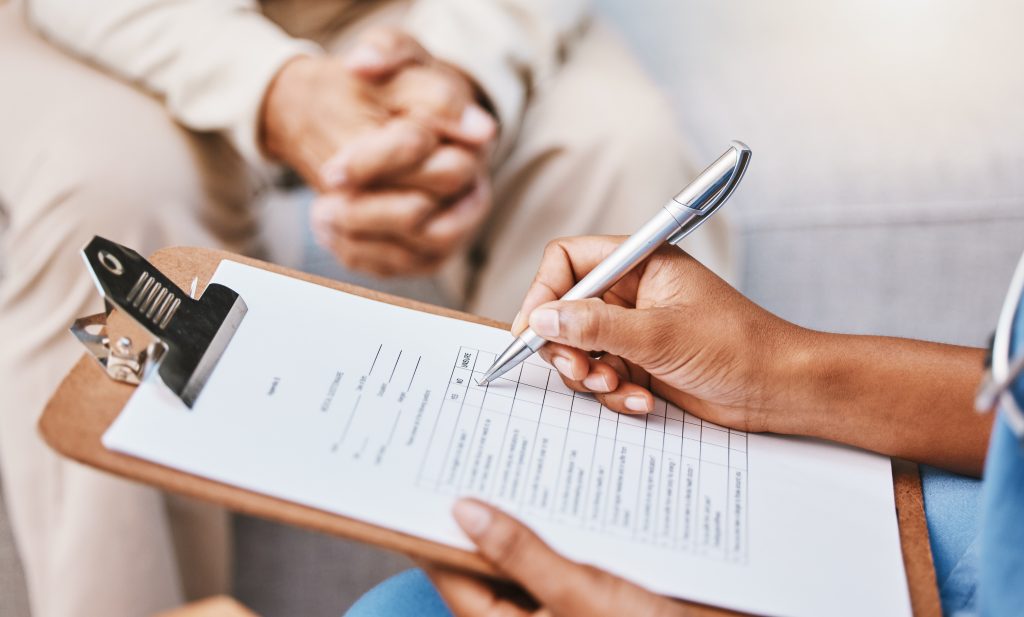
Many patients feel intimidated speaking with healthcare professionals. What advice would you give patients to help them feel more confident asking questions about their care?
First, I would want patients to know that they are not being difficult by asking questions. Asking questions is part of good care. You are the expert in your own life, your own body, your own values, and your own priorities. A health care professional may have medical expertise, but care works best when those forms of knowledge come together.
It can help to write questions down before an appointment, bring a trusted family member or friend, and ask for information to be explained in plain language. Patients can say things like, “Can you explain that again in a different way?” or “What are my options?” or “What would happen if I waited or chose not to do this?” Those are reasonable and important questions.

I also encourage patients to ask what information is certain, what is uncertain, and what decisions need to be made now versus later. Good care should not leave people feeling ashamed, rushed, or confused. Patients deserve information they can understand and enough support to make decisions that align with their values and circumstances.
If you would like to learn more about the roles and responsibilities of certain healthcare professionals in cancer care, as well as some useful questions to ask during those appointments – take a look at our ‘support professionals in cancer care’ and ‘more support professionals in cancer care’ infographics.
What does culturally safe cancer care mean to you, particularly for Indigenous patients and families?
Culturally safe cancer care is not simply about adding Indigenous artwork to a clinic wall or offering a one-time training session. It is about whether Indigenous patients and families experience care as respectful, trustworthy, and free from racism, stereotyping, coercion, and dismissal.
For Indigenous patients, cancer care often takes place within a broader context: histories of medical racism, forced relocation for care, jurisdictional barriers, mistrust created by colonial systems, and the practical realities of travel, cost, family caregiving, language, and community responsibilities. Culturally safe care recognizes that context instead of treating it as peripheral.
To me, culturally safe cancer care means that patients are listened to, believed, and treated with dignity. It means families and community supports are respected. It means Indigenous knowledge, ceremony, language, and traditional healing are not dismissed. It also means health systems take responsibility for removing barriers, rather than expecting patients to navigate unsafe systems alone.
From your perspective, what are the best ways to communicate cancer information and educational resources to Indigenous communities in ways that feel accessible and trustworthy?
Trustworthy communication starts long before a pamphlet or website is created. It begins with relationship. Cancer information is more likely to be received as trustworthy when it is developed with Indigenous communities, not simply translated or delivered to them after the fact.
Resources should be plain-language, visually accessible, and practical. They should answer the questions people actually have: What does this diagnosis mean? What are my options? What will treatment feel like? Can someone come with me? How will I get there? What supports exist for travel, family, food, lodging, and follow-up? For many Indigenous patients, those logistical and relational questions are not secondary; they determine whether care is actually accessible.

The messenger also matters. Information shared by Indigenous health workers, patient navigators, Elders, community health representatives, Indigenous clinicians, and trusted local organizations often carries a different level of credibility. Communication should also leave room for conversation. People need opportunities to ask questions without judgment and to receive information in ways that honour family, community, and cultural context.
“We are seeing more Indigenous voices in medical education, accreditation, health policy, quality standards, and governance. That matters because systems change when Indigenous people are not only consulted, but meaningfully involved in decision-making”.
What changes have you seen in healthcare systems that give you hope for improving cancer equity and patient experiences?
I am encouraged that Indigenous health, anti-Indigenous racism, and cultural safety are increasingly being named as core issues in health care quality, rather than as optional or symbolic work. We are seeing more Indigenous voices in medical education, accreditation, health policy, quality standards, and governance. That matters because systems change when Indigenous people are not only consulted, but meaningfully involved in decision-making.
I also see hope in the growing recognition that equity is not achieved by treating everyone the same. Cancer systems are beginning to understand that access, trust, navigation, and continuity of care look different for different communities. For Indigenous patients, equity may require culturally safe navigation, family-inclusive care, support for travel and lodging, community-based screening, better data governance, and partnerships with Indigenous organizations.
There is still a great deal of work to do, but I am encouraged by movement from awareness toward accountability. Naming racism is important. Measuring change, resourcing Indigenous-led solutions, and sharing power are the next steps.
How can healthcare organizations better build trust with Indigenous communities in cancer care and research?
Trust is built through consistency, humility, transparency, and accountability. Health care organizations need to move away from short-term engagement that only happens when they need approval, participation, or data. Relationships with Indigenous communities should be ongoing and reciprocal.
In cancer care and research, that means being clear about who benefits, who owns the data, how findings will be shared, and how the work will improve care for the communities involved. It also means respecting Indigenous data sovereignty and ensuring that research is not extractive.
Organizations should invest in Indigenous patient navigation, Indigenous leadership, community partnerships, and cultural safety training that is recurring and tied to accountability. They should also be prepared to hear difficult feedback and act on it. Trust is not built by saying the right things; it is built when communities see that their concerns lead to meaningful change.
“Trust is not built by saying the right things; it is built when communities see that their concerns lead to meaningful change.”
What role do Indigenous patient voices and lived experiences play in improving cancer care systems?
Indigenous patient voices are essential. They tell us where the system is working, where it is failing, and where harm is occurring in ways that may not show up in administrative data. Lived experience helps identify the gaps between what a health system believes it is providing and what patients and families actually experience.
In cancer care, those voices can improve everything from screening and diagnosis to treatment planning, navigation, survivorship, palliative care, and family support. Indigenous patients and families can help systems understand what culturally safe communication looks like, what barriers exist in practice, and what forms of support would make care more humane and accessible.
But the patient voice should not be tokenized. Indigenous patients and families should be compensated, respected, and engaged in ways that do not require them to repeatedly relive painful experiences without seeing change. Their knowledge should shape policy, program design, research priorities, and measures of quality.
For Indigenous students or young people interested in healthcare or cancer research, what encouragement or advice would you give them?
I would say: we need you. There is a place for you in medicine, nursing, research, public health, health policy, cancer care, and every part of the health system. Your perspective is not a barrier to success; it is a strength.
I would also encourage students to seek mentorship early and often. You do not have to figure everything out alone. Ask questions, look for pathway programs, connect with Indigenous student centres, Indigenous health organizations, and Indigenous professionals working in fields that interest you. There are people who want to support your success.
The path can be challenging, and there may be moments when systems were not designed with you in mind. But Indigenous learners belong in these spaces. Carrying knowledge is both a gift and a responsibility, and Indigenous students have so much to contribute to the future of health care and cancer research.
If there is one message you would want patients and families affected by cancer to take away from this interview, what would it be?
You deserve care that is respectful, understandable, and culturally safe. You deserve to have your questions answered, your concerns taken seriously, and your family and community context respected.
Cancer can be frightening and overwhelming, but patients and families should not have to navigate that experience alone. Good care is not only about treatment; it is about trust, dignity, communication, and support.
For Indigenous patients and families in particular, I would want them to know that if they have felt unsafe, dismissed, or unheard in health care, that is not a personal failing. Systems have responsibilities. We need to keep building cancer care that is worthy of Indigenous patients’ trust.
“You deserve care that is respectful, understandable, and culturally safe. You deserve to have your questions answered, your concerns taken seriously, and your family and community context respected.”
Conclusion
We are deeply grateful to Dr. Jamaica Cass for sharing her experiences, insights and leadership in Indigenous health and cancer care. Throughout this interview, Dr. Cass highlighted the importance of building healthcare systems that are not only scientifically strong, but also grounded in trust, respect, cultural safety and meaningful relationships with patients and communities. We hope Dr. Cass’s words encourage conversations around equity, accountability and culturally safe care within cancer research, education and healthcare systems across Canada.
Become a Member
OMPRN connects pathologists and molecular pathology researchers across Ontario. Become a member to access exclusive research, educational and networking resources.

OMPRN’s patient resources
OMPRN aims to meet the education needs of everyone, from budding researchers to patients and members of the greater patient community